
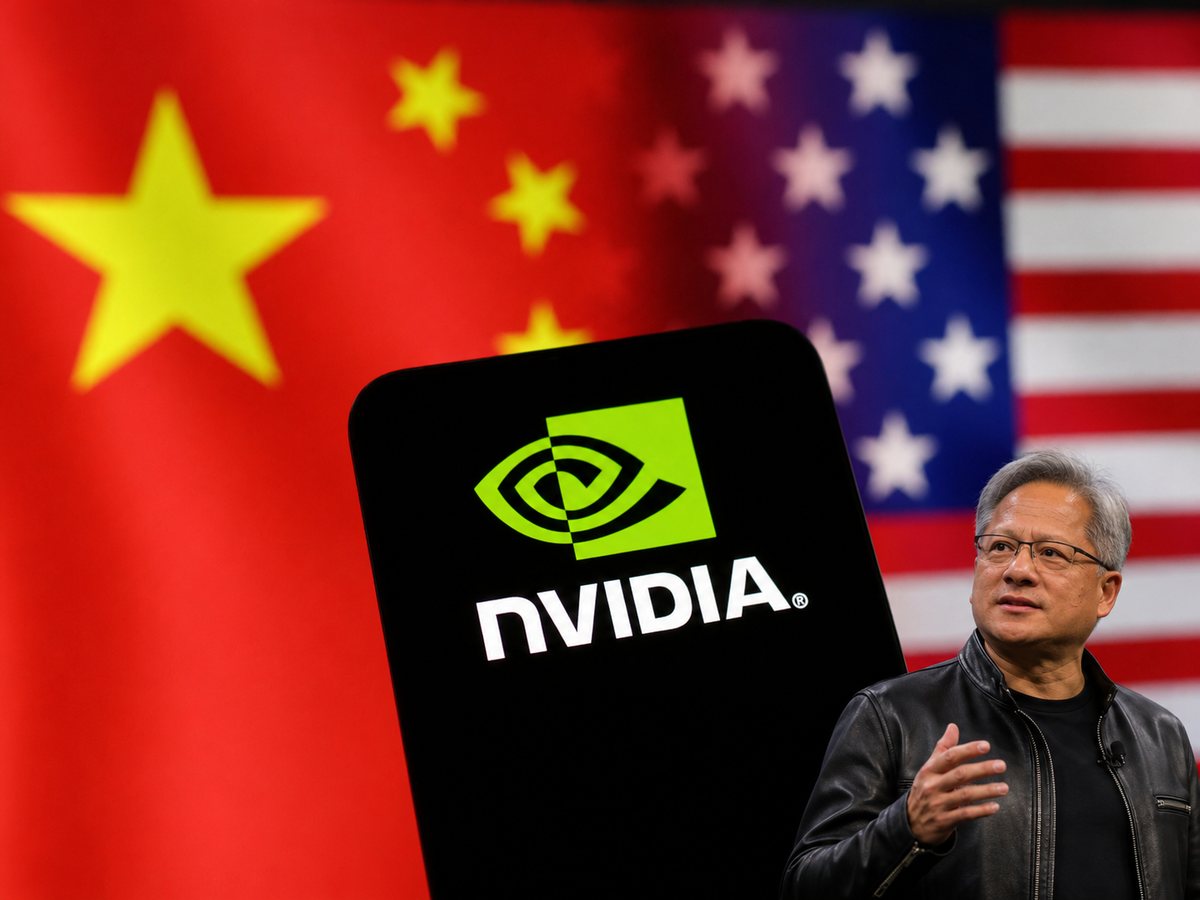
In four days, the company at the centre of the AI chip industry went from an internal investigation to the departure of its chief executive. On Thursday, November 12, Nvidia announced that Jensen Huang, who co-founded the company in 1993, had resigned as CEO, president and board member, effective immediately. CFO Colette Kress is interim CEO while the board searches for a permanent successor, and director Harvey Jones becomes Nvidia’s first board chairman. Shares fell by more than 10% in premarket trading.
It began on Sunday, November 8, when Huang told employees he had been unfaithful to his wife and the board opened an independent investigation into reports that he had been the target of a foreign intelligence effort. Press reports said US authorities suspected the woman involved of working for Chinese intelligence, which Beijing denies. Further press reports about his conduct on Wednesday led the board to meet on his future.
This article is not about the people involved. It is about what the episode shows any business whose demand depends on chips: uncertainty around one company can move through a supply chain faster than a standard forecast can follow.
Why this matters beyond one company
So much of the chip supply chain runs through so few hands. Nvidia dominates AI chips and is worth about $4 trillion, Taiwan’s TSMC makes more than 90% of the world’s most advanced chips, and Nvidia has just lost the co-founder who led it since 1993, with no permanent successor in place.
Policy is the larger driver. Since 2022, the US has restricted exports of advanced chips to China, and Huang has said Nvidia’s share of that market fell from around 95% to effectively zero. Huang had also pushed to preserve Nvidia’s access to the Chinese market and had close ties to the Trump administration, so his exit could have consequences for export policy. Two Democratic senators have asked the administration to preserve documents tied to Nvidia’s chip exports to China, and several congressional committees had asked Huang to attend a closed-door briefing on November 18.
That is the forecasting problem. Historical data can tell a model how chip demand behaved in the past. It cannot tell the model what Washington and Beijing will do next, or who will be running Nvidia when they do.
How exposed is your business?
Most companies cannot say how much of their demand depends on the chip industry. The hard part is indirect exposure: a machine builder or a carmaker can sell into markets that move with semiconductor investment without buying from a supplier in the headlines.
Variable selection in Indicio tests a broad set of external indicators against your own data and shows which ones actually lead your demand. If indicators tied to semiconductors or electronics rank high, you have a measured answer instead of a hunch. If they do not, you can stop worrying about this headline.
Why one number is not enough
When politics is a main driver, a single number hides how wide the plausible outcomes are: every forecast is a central estimate with a range, and policy risk widens that range.
Indicio runs many econometric, statistical and machine-learning models, backtests each one, and combines the best into a single forecast with an uncertainty range. No single model has to be right about politics.
Three scenarios for export controls
Since no one can forecast a policy decision, the useful move is to forecast under each plausible decision. Scenario analysis in Indicio uses conditional forecasting: you set a path for one indicator, and the platform calculates the effect on the variable you are forecasting. For chip-dependent demand, three scenarios are a reasonable start:
- Restrictions stay as they are. The baseline the other two are compared with.
- Restrictions ease. Sales to China resume for some products, with an uncertain effect on availability and prices elsewhere.
- Restrictions tighten. Controls widen or enforcement intensifies, and supply chains reroute or slow down.
These are possibilities, not predictions, and they take no side on which policy is right. Each scenario sets a different path for an indicator, such as the semiconductor imports and electronics retail sales used in Indicio’s semiconductors forecast, and shows the effect on your own demand.
An illustration with a fictional company. Imagine a manufacturer of industrial control equipment whose customers invest more in automation when semiconductor activity is strong. The easing scenario lifts its forecast, the tightening scenario widens the range and lowers the low end, and finance can hold all three against its budget.
What to watch from here
Once the scenarios are set, the question is which one is playing out, and leading indicators can answer it before official statistics, which often arrive weeks or months late. Indicio’s nowcasting uses high-frequency data, such as indicators published daily or weekly, to estimate where a monthly or quarterly figure is heading before it is released.
Three things are worth watching: who Nvidia names as permanent CEO, any congressional follow-up, and any change to export rules or their enforcement. When an indicator breaks from its baseline path, you can see which scenario it resembles.
How to explain it to leadership
A scenario only changes decisions if the people who make them can follow it. Indicio’s explainable forecasting uses SHAP values to show how much each driver pushed the forecast up or down, and hierarchical forecasting carries a scenario from the company total down to product, region and channel, so sales, finance and operations plan from the same numbers.
You cannot forecast the shock, but you can be ready
No forecast anticipates a headline like this one, and none will anticipate the next. What you can do is know your exposure, hold your forecast as a range, and have scenarios ready before the news breaks.
To see how this works on your own data, book a forecasting session with the Indicio team.
This article describes scenarios, not predictions of events or share prices. Facts about the Nvidia investigation are as reported by the media, based on the latest available updates, on November 13, 2026, and may change.